
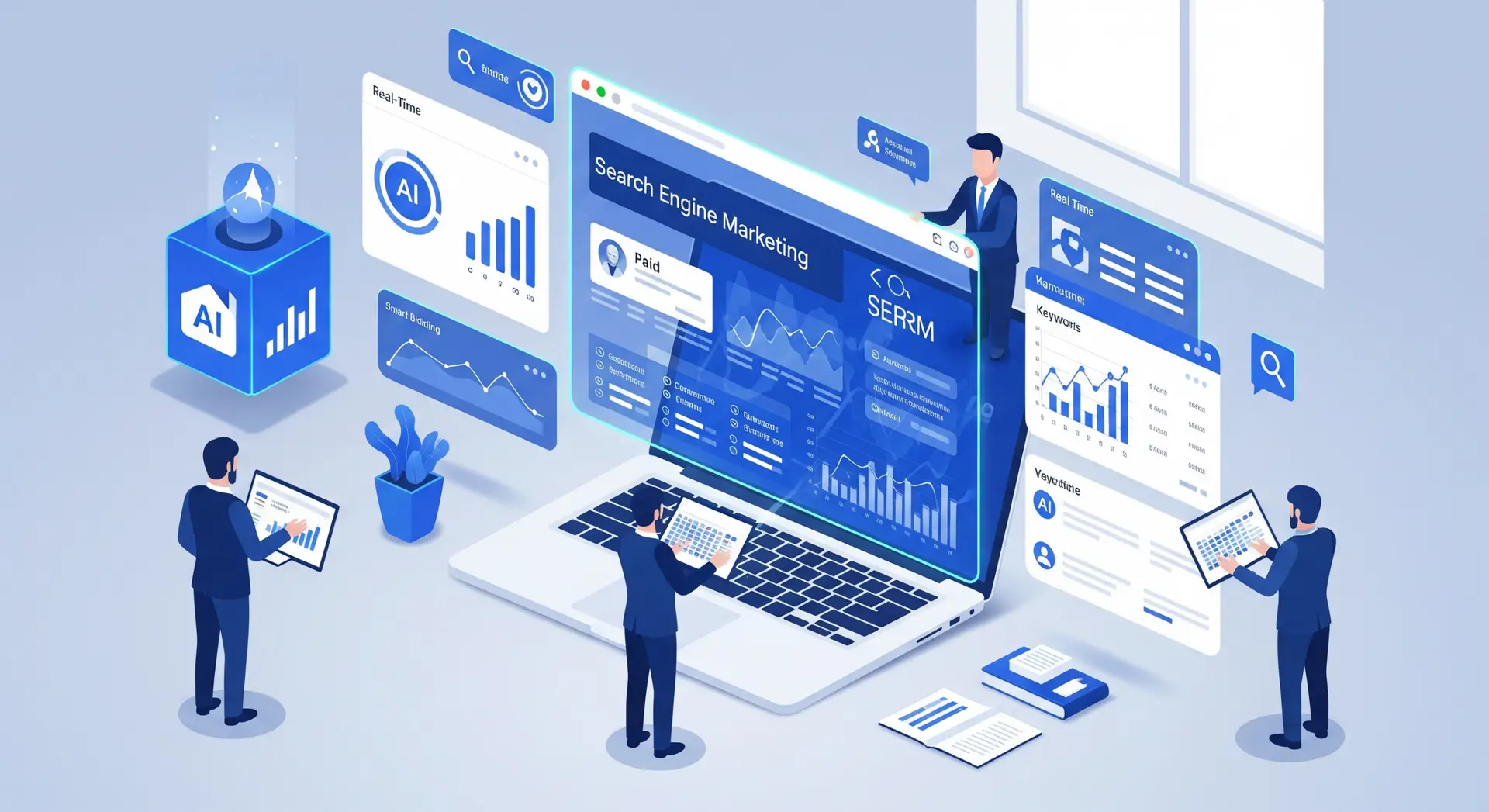
Search Engine Marketing, or SEM, is no longer just about running ads on Google and hoping for clicks. In 2026, SEM has become smarter, faster, and more competitive than ever. Businesses that understand how modern SEM works can generate leads almost instantly, while those using outdated tactics struggle to stay visible.
Thank you for reading this post, don't forget to subscribe!This complete guide explains what SEM looks like in 2026, how it has changed, and how you can use it for instant, measurable growth.
What Is Search Engine Marketing (SEM)?
Search Engine Marketing is a digital marketing strategy that focuses on gaining visibility in search engine results through paid advertising. The most common form of SEM is pay-per-click (PPC) advertising, where advertisers pay only when someone clicks on their ad.
In simple terms, SEM helps your business appear at the top of search results when people are actively looking for products or services you offer.
Why SEM Still Matters in 2026
Some marketers believe organic traffic alone is enough. In reality, SEM remains essential, especially in competitive markets.
Here’s why SEM is more important than ever in 2026:
- Organic rankings take time, while SEM delivers immediate visibility
- Search results are more crowded with ads, shopping results, and AI summaries
- User intent is clearer at the moment of search
- Advanced targeting allows ads to reach the right people at the right time
If you want fast results, SEM is still the most reliable option.
How SEM Has Evolved in 2026
AI Driven Campaign Management
In 2026, artificial intelligence plays a central role in SEM. Platforms like Google Ads now rely heavily on machine learning to optimize bids, placements, and ad combinations in real time.
Instead of manually adjusting every keyword, marketers focus more on strategy, data quality, and conversion tracking.
Fewer Keywords, More Intent
Exact keyword targeting is less important than it used to be. Search engines now understand user intent better than ever.
Campaigns perform best when built around:
- Search intent
- Topic relevance
- Quality landing pages
- Strong conversion signals
Broad match keywords combined with smart bidding often outperform long keyword lists.
Voice and Visual Search Integration
With the rise of voice assistants and visual search, SEM campaigns in 2026 also target:
- Conversational queries
- Question based searches
- Image driven product searches
Ads are now optimized for how people speak and search, not just how they type.
Key Components of a Successful SEM Strategy
1. Keyword Research That Focuses on Intent
Keyword research in 2026 is less about volume and more about meaning.
Focus on:
- Commercial intent keywords
- Problem solving searches
- Local and service based queries
- High value long tail searches
For example, “best CRM software for small businesses” converts better than “CRM software.”
2. Smart Bidding Strategies
Manual bidding is mostly obsolete. The best performing campaigns use automated bidding strategies such as:
- Maximize conversions
- Target CPA
- Target ROAS
These strategies use historical data and real time signals to adjust bids automatically.
3. High Quality Ad Copy
Even with AI optimization, ad copy still matters.
Effective SEM ads in 2026:
- Match search intent closely
- Use clear benefits, not hype
- Include strong calls to action
- Highlight trust signals like reviews or guarantees
Short, clear messages outperform clever but vague language.
Landing Pages That Convert in 2026
Speed and Mobile Experience
Most paid traffic comes from mobile devices. If your landing page loads slowly or looks cluttered, your ad spend is wasted.
A strong SEM landing page should:
- Load in under three seconds
- Be mobile friendly
- Have one clear goal
- Remove unnecessary distractions
Personalization and Dynamic Content
Modern SEM platforms allow dynamic landing pages that adapt based on:
- Search query
- Location
- Device
- User behavior
This improves relevance and boosts conversion rates significantly.
SEM vs SEO in 2026: Which Is Better?
This is not an either or decision.
SEM Advantages
- Instant visibility
- Predictable traffic
- Easy testing and scaling
- Clear ROI tracking
SEO Advantages
- Long term growth
- Lower cost per click over time
- Strong brand authority
The smartest approach is using SEM for fast results while building SEO for sustainable growth.
Common SEM Mistakes to Avoid in 2026
Ignoring Conversion Tracking
Running ads without proper tracking is one of the biggest mistakes. Without data, AI optimization fails.
Always track:
- Form submissions
- Phone calls
- Purchases
- Key engagement actions
Sending Traffic to Generic Pages
Driving paid traffic to your homepage rarely works. SEM requires focused landing pages that match the ad intent.
Not Testing Enough
Even with automation, testing is critical. Test:
- Headlines
- Calls to action
- Landing page layouts
- Audience segments
Budget Planning for SEM Campaigns
In 2026, SEM costs vary widely by industry. The key is not spending more, but spending smarter.
Tips for better budget control:
- Start with a test budget
- Focus on high intent keywords
- Pause low performing ads quickly
- Scale only what converts
A well optimized small budget can outperform a poorly managed large one.
The Future of SEM Beyond 2026
Looking ahead, SEM will continue to blend with:
- AI search experiences
- Predictive user intent
- Privacy focused tracking models
Marketers who focus on fundamentals like relevance, trust, and user experience will stay ahead, regardless of platform changes.
How is SEM different from SEO in 2026?
SEM provides immediate results through paid ads, while SEO focuses on long-term organic rankings. In 2026, SEM is ideal for instant growth and testing, whereas SEO supports sustainable traffic and brand authority. The best strategy combines both.
Is SEM still effective with AI-powered search results?
Yes, SEM is highly effective in 2026 despite AI-driven search experiences. Paid ads still appear prominently and benefit from advanced targeting, smart bidding, and real-time optimization powered by artificial intelligence.
What are the biggest benefits of SEM for businesses in 2026?
The main benefits of SEM in 2026 include instant visibility, precise audience targeting, measurable ROI, flexible budgeting, and the ability to scale campaigns quickly based on performance data.
How much budget is needed for a successful SEM campaign in 2026?
There is no fixed budget for SEM success. Small businesses can start with a modest budget by targeting high-intent keywords and optimizing conversions. The key is smart spending, continuous testing, and data-driven optimization rather than high ad spend.