
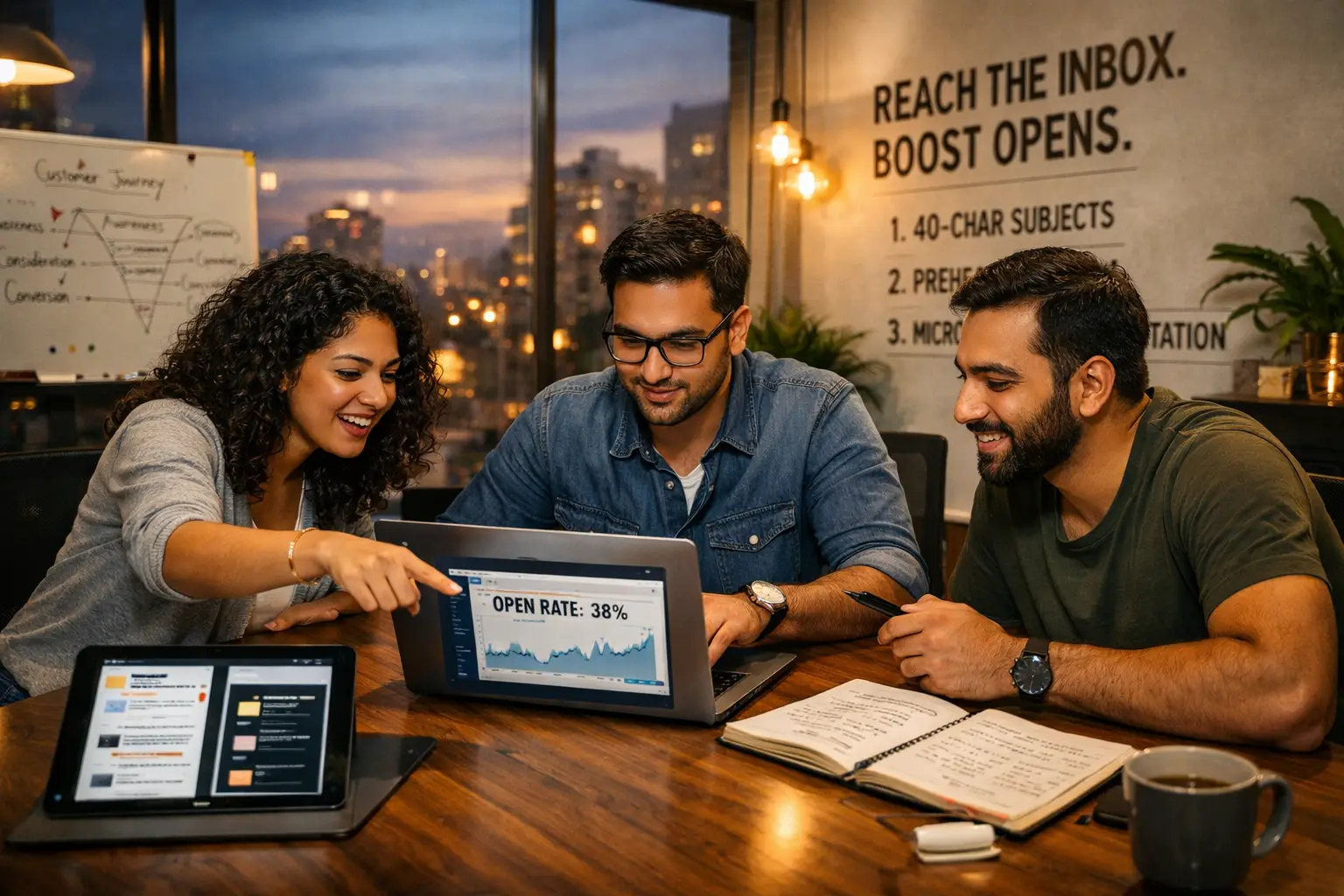
In 2026, the average person receives over 120 emails per day. In an era where AI-driven “noise” is at an all-time high and inbox filters are smarter than ever, getting a subscriber to simply click “open” is no longer a matter of luck—it’s a precise science.
While industry benchmarks suggest a “good” open rate hovers between 15% and 25%, top-tier marketers are smashing these numbers by shifting from generic “blasts” to hyper-personalized, behavior-driven experiences. If your emails are currently sitting in the “ignored” pile, it’s time to bridge the gap between being another notification and becoming a must-read.
1. The Gateway: Mastering the Psychology of the Subject Line
Your subject line is the “headline” of your email. If it fails, the rest of your hard work remains invisible. In 2026, the trend has shifted away from “clickbait” toward clarity, curiosity, and ultra-personalization.
The 40-Character Rule
With over 80% of users predominantly opening emails on mobile devices, your subject line must be “thumb-friendly.” Subject lines longer than 40–50 characters get cut off, losing their impact.
- Bad: “Check out our brand new collection of summer essentials that are on sale right now!”
- Good: “Your summer essentials are here (20% off) ☀️”
Leveraging AI for “Predictive” Subject Lines
Modern tools now use predictive AI to analyze which words resonate with specific segments of your audience. Instead of guessing, use A/B testing to let your audience decide. Data shows that AI-optimized subject lines produce 50% higher open rates than manually written ones.
The Power of “Micro-Urgency”
Avoid “spammy” urgency like “ACT NOW OR LOSE EVERYTHING.” Instead, use subtle, helpful urgency: “Your 24-hour early access expires at midnight.” This feels like a service rather than a sales tactic.
2. Beyond the Subject Line: The Secret Role of Preheader Text
If the subject line is the hook, the preheader text (the short summary text that follows the subject line in an inbox) is the “closer.”
Too many brands waste this space with “Can’t see this email? View in browser.” In 2026, the preheader should act as a Secondary Value Proposition.
Subject: “We’ve missed you, [Name]!”
Preheader: “Here is a $10 credit to use on your next order—no strings attached.”
By providing immediate value in the preheader, you give the recipient a logical reason to engage before they even see the body of the email.
3. Segmentation: Moving from Lists to “Micro-Behaviors”
Sending the same email to your entire list is the fastest way to tank your sender reputation. High open rates are a byproduct of relevance.
What is Behavioral Segmentation?
In 2026, we look at “micro-behaviors.” Instead of just knowing someone bought a shirt once, we track:
- Product Zooming: Did they zoom in on a specific color?
- Frequency of Visits: Have they visited a specific category page three times this week?
- Engagement Timing: Do they usually open emails at 8 PM on a Tuesday?
Automated Lifecycle Flows
Triggered emails—like welcome series, abandoned cart reminders, and post-purchase follow-ups—represent only 2% of send volume but often account for over 40% of total email revenue. Because these are sent based on a user’s specific action, their open rates often exceed 45%.
4. Establishing “Sender Authority” and Trust
People don’t open emails from strangers. They open emails from brands they recognize and trust.
The “Friendly From” Name
Experiment with your sender name. Instead of “Company Marketing Team,” try “Sarah from [Company Name].” This adds a human touch that cuts through corporate clutter.
Technical Deliverability (The Boring but Essential Part)
You can’t get an open if you’re in the spam folder. Ensure your technical “house” is in order:
- SPF, DKIM, and DMARC: These authentication protocols prove to Gmail and Outlook that you are who you say you are.
- List Hygiene: Regularly remove “ghost” subscribers who haven’t opened an email in 6 months. A smaller, engaged list is more valuable than a massive, silent one.
5. Design for the “Dark Mode” and Mobile-First Era
In 2026, Dark Mode is the default for over 80% of smartphone users. If your email looks like a broken white box in a dark interface, it creates a jarring user experience.
Key Design Principles for Higher Engagement:
- Single-Column Layout: The most reliable structure for mobile-scrolling.
- “Above the Fold” Focus: Place your most important message and CTA at the very top.
- Lightweight Images: Slow-loading emails lead to immediate exits. Use compressed, high-quality visuals.
- Accessibility: Use alt-text for images so that even if the pictures don’t load, the recipient knows what the email is about.
6. The 2026 Trend: Interactive and “Living” Emails
Static emails are becoming a thing of the past. To keep open rates high over time, you need to offer an experience.
- Embedded Polls: Ask a question directly in the email.
- Live Timers: Show a countdown clock that updates in real-time.
- Scratch-to-Reveal: Interactive elements that “gamify” the inbox increase engagement rates by up to 30%.
Summary Checklist for a 100% Open-Ready Campaign
| Component | Goal | 2026 Best Practice |
| Subject Line | Grab Attention | Under 40 chars; personalized; curiosity-driven. |
| Preheader | Provide Context | Complement the subject line with a clear benefit. |
| Segmentation | Ensure Relevance | Use behavior-based triggers, not just demographics. |
| Timing | Reach at the Peak | Use AI-driven “Send Time Optimization.” |
| Design | Visual Comfort | Mobile-first; Dark Mode compatible; Accessible. |
What is the ideal length for a subject line on mobile devices?
For maximum impact in 2026, keep your subject lines between 30 and 40 characters. Since over 80% of users now open emails on smartphones, anything longer will likely be cut off. Focus on front-loading the most important value or "hook" in the first 5 words.
How often should I clean my email list to maintain high open rates?
You should perform a deep "scrub" of your list at least once every 3 to 6 months. Removing "ghost" subscribers—those who haven't opened an email in over 180 days—improves your sender reputation with providers like Gmail and Apple, ensuring your emails land in the primary inbox rather than the spam folder.
Does "Dark Mode" really affect my email's performance?
Yes, significantly. With the majority of mobile users now using Dark Mode, an email that isn't optimized (e.g., has jagged white backgrounds around transparent logos) looks unprofessional and is hard to read. Using PNGs with transparent backgrounds and testing your colors for contrast in dark interfaces can prevent immediate deletes.