
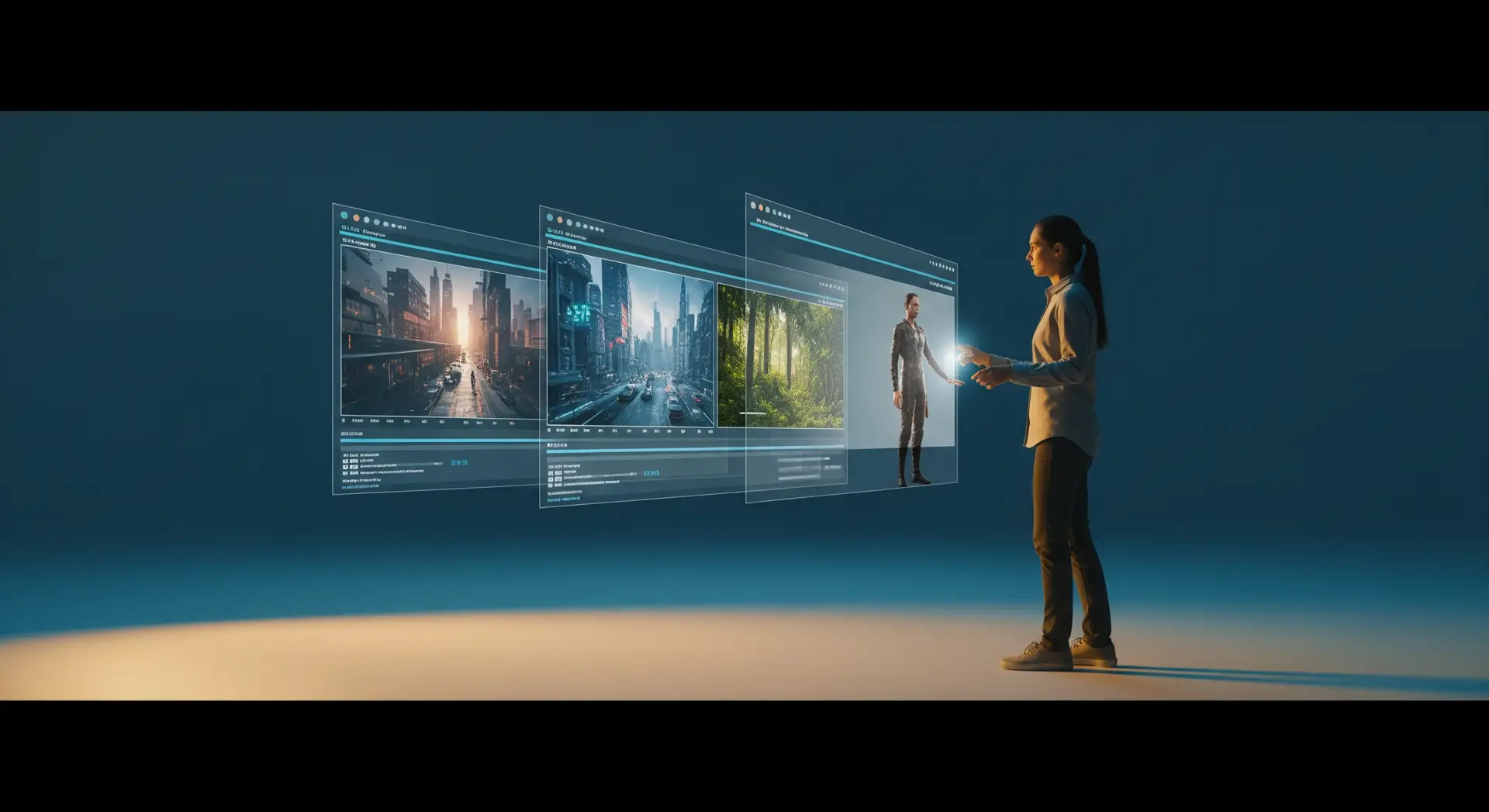
The digital landscape of 2026 has reached a tipping point: video is no longer just a “preferred” medium; it is the universal language of the internet. However, the days of needing a $50,000 production budget and a six-week lead time are officially over.
Thank you for reading this post, don't forget to subscribe!Thanks to the rapid evolution of Generative AI, we have moved from the “uncanny valley” of 2024 into an era of cinematic photorealism and native audio synchronization. Today, a single text prompt can generate a high-definition, 3-minute masterpiece complete with sound effects, dialogue, and consistent characters.
In this 2026 review, we break down the elite platforms that are redefining how creators, marketers, and filmmakers bring their visions to life.
1. OpenAI Sora 2: The Gold Standard for Narrative Realism
OpenAI’s Sora 2 remains the industry’s most talked-about model for a reason: its understanding of physical world physics is unmatched.
While the first version dazzled us with 60-second clips, Sora 2 has matured into a storytelling powerhouse. It now supports multi-shot consistency, meaning your protagonist will look exactly the same in a forest at noon as they do in a rain-slicked city at midnight.
- Best For: Cinematic storytelling and high-end brand commercials.
- Key Feature: “Cinematic Continuity” – generates entire sequences with consistent lighting and character models.
- Pros: Incredible physics (liquids splash and hair flows naturally); stunning 4K output.
- Cons: Higher price point and strict safety filters.
2. Google Veo 3.1: The King of Native Audio & Integration
If Sora is the filmmaker, Google Veo 3.1 is the ultimate producer. As of early 2026, Veo 3.1 leads the pack in Native Audio Generation. When you prompt a “cyberpunk car speeding through puddles,” Veo doesn’t just show the car; it synthesizes the high-pitched hum of the engine and the rhythmic splat of water hitting the pavement—all perfectly synced to the frame.
- Best For: YouTube creators and Google Workspace power users.
- Key Feature: “Audio-Visual Synergy” – auto-generates Foley sound effects and background scores.
- Pros: Seamless integration with Canva and Adobe; extremely fast rendering times.
- Cons: Can sometimes lean toward a “stock footage” aesthetic unless prompts are highly specific.
3. Runway Gen-4.5: Unprecedented Creative Control
For professional VFX artists and designers, Runway Gen-4.5 is the “Photoshop of Video.” While other tools are “one-click wonders,” Runway offers a suite of Directorial Controls. Their “Multi-Motion Brush” allows you to paint specific areas of a static image to move in different directions—making a flag wave while a character blinks and a cloud drifts, all independently.
- Best For: Professional editors and experimental filmmakers.
- Key Feature: “Director’s Palette” – granular control over camera tilt, pan, and zoom intensity.
- Pros: Best-in-class Image-to-Video conversion; incredible community plugins.
- Cons: Steeper learning curve for beginners.
4. Kling AI 2.6: The Global Value Leader
Hailing from the forefront of Asian AI research, Kling AI 2.6 has disrupted the market by offering the longest single-clip generations—up to 3 minutes in a single go. In 2026, Kling is the go-to for “Social Media Volume.” Its pricing model is significantly more accessible for small businesses and independent influencers.
- Best For: Social media marketers and long-form content creators.
- Key Feature: “Extended Duration” – creates long, coherent scenes without the need for manual stitching.
- Pros: Generous free daily credits; high expressive quality in human facial movements.
- Cons: Servers can occasionally experience high latency during peak hours.
5. Luma Dream Machine: The Speed Demon
When you need a concept visualized now, Luma Dream Machine is the answer. In 2026, Luma has optimized its architecture for mobile-first creation. It specializes in “Cinematic Prototyping,” allowing you to iterate through five different visual styles in the time it takes other models to render one.
- Best For: Rapid prototyping and viral TikTok/Reels content.
- Key Feature: “Dream Styles” – one-tap filters that turn your prompt into 3D animation, claymation, or 35mm film.
- Pros: Near-instant previews; highly intuitive user interface.
- Cons: Occasional “hallucinations” in complex mechanical movements.
The 2026 Feature Comparison: At a Glance
| Platform | Primary Strength | Max Duration | Quality |
| Sora 2 | Photorealism | 60s | 4K / Ultra-HD |
| Veo 3.1 | Audio/Sync | 60s | 4K / Pro-Audio |
| Runway Gen-4.5 | Creative Control | 40s | 1080p (Upscalable) |
| Kling 2.6 | Clip Length | 180s | 4K / High Motion |
| Luma Machine | Generation Speed | 30s | 1080p / Stylized |
How to Choose Your AI Video Platform
Selecting the right tool depends entirely on your project’s goals. Ask yourself these three questions:
1. What is my distribution channel?
If you are producing for TikTok or Instagram Reels, the speed and stylized presets of Luma or InVideo AI are your best friends. If you’re creating a hero video for a website, the cinematic weight of Sora 2 is worth the investment.
2. How much control do I need?
Do you want to “set it and forget it”? Use Veo 3.1. Do you want to manually direct the camera and decide exactly which part of the scene moves? Runway Gen-4.5 is the only logical choice.
Which AI video platform is best for high-end cinematic realism in 2026?
Answer: OpenAI Sora 2 is currently the gold standard for narrative realism. Its advanced physics engine and “Cinematic Continuity” feature allow creators to maintain consistent character models and lighting across multiple shots, making it the top choice for high-end brand commercials and filmmaking.
Can AI video generators create sound effects and dialogue automatically?
Answer: Yes. Platforms like Google Veo 3.1 lead the market in Native Audio Generation. With “Audio-Visual Synergy,” these tools can synthesize perfectly synced Foley sound effects (like tires splashing in water) and background scores directly from your text prompt.
What is the longest video clip an AI can generate in 2026?
Answer: Kling AI 2.6 is the industry leader for duration, offering single-clip generations of up to 3 minutes (180 seconds). This makes it the go-to platform for long-form social media content and marketing videos that require coherence without constant manual stitching.
Is there an AI video tool that allows for manual directorial control?
Answer: Runway Gen-4.5 is designed specifically for professional editors who need granular control. Its “Director’s Palette” and “Multi-Motion Brush” allow users to manually control camera movements (pan, tilt, zoom) and direct specific elements of an image to move independently.
Which AI video generator is best for beginners and viral content?
Answer: Luma Dream Machine is the top choice for rapid prototyping and viral TikTok/Reels content. It is optimized for mobile-first creation and features “Dream Styles,” which allow users to apply stylized filters like claymation or 3D animation with a single tap.
Comments are closed.